

Dolly casino Plinko
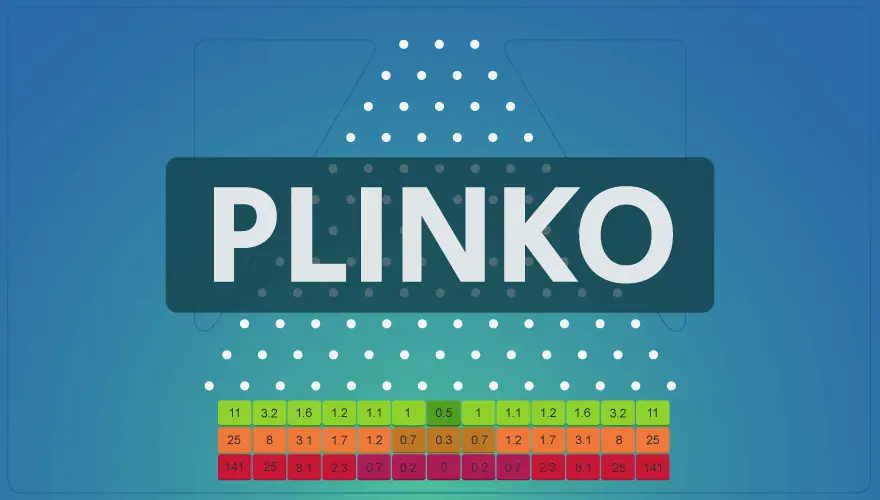
Dolly Casino Plinko: what this game really offers before you press drop
I’ve noticed that Plinko often attracts players who normally ignore classic slots. At first glance, that makes sense: the interface is stripped down, the rules are easy to grasp, and each round is over in seconds. On the Dolly Casino Plinko page, the idea looks almost disarmingly simple. You choose a stake, set a risk level, release a ball, and watch it bounce through a field of pegs until it lands in a payout slot at the bottom.
But that simplicity is also where many players misread the format. Plinko is not just a casual “drop and see” distraction. In practice, it is a fast, probability-driven casino game built around distribution, variance, and session rhythm. The screen looks clean, yet the underlying experience can swing from calm and repetitive to surprisingly tense depending on how the settings are configured.
That is exactly why the game deserves a closer look. If you want to understand whether Dolly Casino Plinko is worth trying, the key question is not simply “Can it pay well?” The better question is: what kind of session does it create, how does the risk profile behave, and does that style of play fit your expectations?
What Plinko is and why it attracts so much attention
Plinko is a chance-based casino game inspired by the familiar pegboard concept. A ball falls from the top of the board, hits pins on the way down, changes direction repeatedly, and eventually lands in one of several multipliers placed along the bottom row. The central slots usually offer lower returns and appear more often, while the outer edges may carry much larger multipliers but are hit less frequently.
The reason Plinko became so noticeable is easy to explain. It combines three things that rarely sit together this neatly:
Instant readability. Even a first-time player understands what is happening within seconds.
Visible randomness. Unlike a slot spin, the outcome feels physically animated. You can watch the path unfold, even though the result is still determined by the game’s random logic.
Adjustable session character. A simple change in risk level can make the same board feel conservative, balanced, or highly aggressive.
That combination matters. Many casino games either demand too much explanation up front or become repetitive too quickly. Plinko sits in a middle ground: easy to enter, but not always easy to read correctly. I’d say that is one of its biggest strengths. It looks light, yet it can produce a very specific kind of pressure once the player starts chasing higher multipliers.
One observation that stands out to me is this: in slots, anticipation usually builds before the result is shown; in Plinko, anticipation happens during the result. That small difference changes the emotional rhythm of the session more than many players expect.
How the Dolly Casino Plinko mechanic works in real play
To understand Dolly Casino Plinko properly, it helps to separate the visual layer from the practical one. Visually, the mechanic is straightforward: the ball bounces left and right through a triangular peg layout. Practically, the game is a matrix of probabilities shaped by a few core settings.
The main elements are usually these:
stake size;
number of rows on the board;
selected risk level;
multiplier distribution at the bottom.
Each drop creates a path that looks organic, but the important point for the player is not the animation itself. What matters is how the chosen setup changes the spread of likely outcomes. More rows generally mean a longer route and a wider outcome range. Risk level affects how sharply the multiplier table is structured. Lower-risk settings tend to cluster more results around modest returns, while higher-risk settings flatten the comfort zone and push more value toward rare edge hits.
In practical terms, that means the same game can feel completely different from one session to another. A low-risk board may produce many small returns that keep the balance moving in short, manageable steps. A high-risk board can generate long stretches of weak results interrupted by occasional standout hits.
| Setting | What it changes | What it means in practice |
|---|---|---|
| Stake | Base amount per drop | Directly affects session cost and emotional pressure |
| Rows | Path length and outcome spread | More rows often increase dispersion and make high multipliers more remote |
| Risk level | Multiplier balance across the board | Changes whether the session feels steady or swing-heavy |
| Bottom multipliers | Potential return zones | Show where frequent small results end and rare premium outcomes begin |
Players sometimes assume that because they can watch the ball bounce, they are seeing a more “physical” or intuitive form of randomness. I would be careful with that interpretation. The visual path creates involvement, but it does not give the player control. The board is easy to read with the eyes, not easy to beat with judgment.
Why the pace of Plinko feels different from slots
Session rhythm is one of the most important reasons Plinko stands apart. On Dolly Casino Plinko, rounds are short, often extremely short. There are no reels to stop, no bonus feature to wait for, no symbol map to decode. The action is compressed into a quick arc: set, drop, resolve, repeat.
This has two major consequences. If bonuses are what you care about, mobile access checklist breaks down every offer currently running.
First, the game can feel efficient. If a player dislikes long animations or layered bonus rounds, Plinko may feel refreshingly direct. You are not waiting for the machine to explain itself. The result arrives fast, and the next decision is immediate.
Second, speed can distort bankroll perception. Because each round is so brief, it is easy to underestimate how many drops have already happened. This is one of the practical risks of the format. A player may think the session has been fairly light, then look at the number of rounds completed and realize the balance has moved much more than expected.
The board animation gives each round a visible journey, but the actual consumption rate can still be very high. That is another memorable trait of Plinko: it often feels slower emotionally than it is financially.
Risk levels, probabilities, and what the board is really telling you
Before launching Dolly Casino Plinko, I think every player should understand one basic truth: the board does not offer equal chances across all multipliers. The center is usually where outcomes cluster. The outer edges, where the largest multipliers tend to sit, are there to create asymmetry. They are visible, tempting, and statistically less common.
This is not a flaw. It is the foundation of the format. Plinko works because the board creates a distribution curve. Small and medium returns are generally more accessible; standout results are rarer by design. When the risk level rises, that curve usually becomes harsher. The board may still look similar, but the practical experience changes sharply.
Here is the most useful way to think about it:
Low risk usually means more frequent modest returns and fewer dramatic swings.
Medium risk tends to create a more mixed session, where the balance can hold for longer but still move unpredictably.
High risk shifts the appeal toward rare premium multipliers and makes dry streaks more likely.
For many players, the mistake is not choosing high risk itself. The mistake is expecting high risk to behave like medium risk with better upside. It does not. It behaves like a different style of game. That distinction matters because it changes what kind of session you are agreeing to before the first ball drops.
Another point worth stressing: short-term patterns in Plinko can be emotionally persuasive but statistically misleading. A few central landings in a row do not mean the edges are “due.” Likewise, a rare large multiplier does not signal that another one is close. The game can create a strong illusion of near-miss logic because the path is visible, but the player should resist reading intent into the bounce sequence.
How risky is Dolly Casino Plinko, and who is likely to enjoy it
Plinko can be low-pressure or highly aggressive depending on configuration, but it is never a game I would describe as strategically deep. It is a format for players who enjoy quick outcomes, clear stakes, and visible randomness. If that sounds appealing, Dolly Casino Plinko can make a lot of sense.
It is especially suitable for players who:
prefer short rounds over long feature cycles;
want simple controls without learning paytables and symbol behavior;
like adjusting session intensity through risk settings;
accept that the game is driven by probability rather than tactical decision-making.
It may be less suitable for players who:
need layered bonus rounds to stay engaged;
prefer slower bankroll consumption;
expect visible momentum to reveal meaningful patterns; If bonuses are what you care about, free chips for Canadian players breaks down every offer currently running.
get frustrated by long stretches of low-value outcomes on higher-risk boards.
In other words, Plinko is not automatically “for casual players” just because the interface is simple. Some casual users enjoy the clean design, but others may actually find the pace too abrupt and the swings too exposed. Simplicity of layout should not be confused with softness of experience.
What to understand about session flow, expected outcomes, and bankroll pressure
One of the most practical questions a player can ask is not “What is the max multiplier?” but “How does this session usually behave between standout moments?” That is the better lens for evaluating Dolly Casino Plinko.
The answer depends on configuration, but several patterns are common:
| Session trait | Typical effect | Why it matters |
|---|---|---|
| Very fast rounds | Many outcomes in a short time | Can accelerate losses or gains before the player fully notices the pace |
| Central clustering | Frequent lower multipliers | Creates stability on some settings but can feel repetitive |
| Rare edge hits | Occasional large returns | Drive excitement, but should not define realistic expectations |
| Risk-dependent variance | Session character changes sharply | Small setting changes can produce a very different bankroll curve |
From a player’s perspective, this means bankroll control matters more than the minimalist design suggests. A game with one button and one falling ball can still produce a demanding session. If anything, the clean interface removes friction and makes repeated wagering easier.
I often tell readers to pay attention to how quickly they start increasing stake size in games like this. Plinko has a way of making small adjustments feel harmless because each round is so compact. That can be deceptive. A slightly larger stake on a high-risk setup changes the session profile much more than many players expect.
How Plinko differs from classic slots and other casino games
The clearest difference between Plinko and classic slots is structural. Slots are built around reel outcomes, symbol combinations, paylines or ways systems, and often bonus rounds. Plinko strips all of that away. There are no wilds to track, no scatter count to anticipate, no feature trigger to chase in the usual sense. The tension comes from the descent itself and from where the ball finally lands.
Compared with roulette, Plinko feels more animated and less binary. Compared with blackjack for Canadian players, it offers no meaningful decision depth after setup. Compared with crash-style formats, it is less about timing and more about probabilistic spread. Compared with slots, it is cleaner but also less layered.
That difference has practical consequences:
Plinko is easier to understand than most slots.
It gives less narrative build-up than feature-heavy games.
It can feel more transparent because the result path is visible.
It may become repetitive faster for players who need variety in symbols, themes, and bonus structures.
There is also a psychological distinction I find important. In slots, players often chase events: free spins, expanding reels, bonus picks. In Plinko, players are more often chasing shape: the idea of the ball reaching the edge, the rare multiplier, the “perfect” drop. It is a different kind of anticipation, and for some players it is cleaner and more satisfying. For others, it lacks texture.
Strong points and weak spots of Dolly Casino Plinko in practice
When I evaluate Plinko as a real-money casino format rather than a novelty, I see a fairly clear split between what it does well and where it can disappoint.
Its strongest points are practical, not cosmetic. The game is accessible, fast, and easy to read. It lets the player adjust intensity without requiring a new learning curve. It also creates visible suspense in a way that many simple games do not. The board animation is not just decoration; it shapes the feeling of each round.
Its weaker side is also practical. Because the format is so direct, there is less variety to absorb long sessions. If the chosen risk setting does not match the player’s expectations, the experience can sour quickly. On aggressive setups, long underwhelming stretches are not unusual. On safer setups, the action may start to feel flat.
I would summarize the balance like this:
Strength: clear rules and near-instant understanding.
Strength: flexible session tone through risk selection.
Strength: strong visual suspense despite minimal controls. The full picture of payment methods lives in roulette overview, including the less common ones.
Limitation: limited depth for players who want evolving features.
Limitation: speed can encourage overplay.
Limitation: high-risk settings can produce frustrating stretches that feel harsher than the simple layout suggests.
A third observation that deserves mention: Plinko often feels fairest when the player treats it as a rhythm game, not a hunting game. The moment someone starts trying to “catch” the big multiplier through impulse adjustments, the format usually becomes more punishing than enjoyable.
What to check before you start playing
If you are considering Dolly Casino Plinko, I would focus on a few practical checks before the first real-money session. These points matter more than theme or presentation.
Review the risk setting carefully. Do not assume the default option matches your style. This one choice can reshape the entire session.
Look at the multiplier map. The bottom row tells you where the value is concentrated and where it is merely possible.
Set a round budget, not just a money budget. Because drops resolve quickly, limiting only the balance amount may not be enough.
Use demo play if available. In Plinko, demo mode is useful not for learning controls, but for feeling the tempo and understanding how a chosen setup behaves over time.
Decide what kind of session you want. If you want steady entertainment, choose accordingly. If you want occasional large spikes, accept the quieter stretches that come with that choice.
That last point is probably the most important. Plinko does not hide its character for long. Within a short trial, it usually becomes clear whether the format suits you. Some players immediately connect with the clean probability-driven loop. Others miss the layered progression of slots almost at once.
Final verdict on Dolly Casino Plinko
Dolly Casino Plinko offers a very specific kind of casino experience: fast rounds, visible randomness, adjustable intensity, and a direct relationship between risk level and session feel. Its key strength is not complexity but clarity. You can understand the format quickly, yet that should not be mistaken for a soft or predictable ride.
What the game does best is turn a simple falling-ball concept into a high-tempo probability exercise with real emotional pull. The suspense comes from watching the path unfold, while the real substance comes from how the board is configured. That is why Plinko can feel calm on one setting and unforgiving on another.
I would recommend it to players who value speed, clean design, and straightforward decision points. I would be more cautious if you prefer rich bonus structures, slower pacing, or games where decision-making goes beyond setup. The main thing to remember is this: Plinko is easy to enter, but the session profile deserves respect. If you approach Dolly Casino Plinko with realistic expectations about variance, pace, and outcome distribution, it can be an engaging format. If you expect the simple interface to guarantee a gentle experience, the game may surprise you for the wrong reasons.
FAQ
How does Plinko work when a ball drops on the board?
A round starts when the ball is launched and it bounces through pegs to land in one of the payout sections. The section determines the multiplier result for that round.
What should be checked before the first Plinko launch so the game runs smoothly?
Confirm the amount or stake value displayed for the next drop is set correctly. Also verify that sound and full-screen permissions are not blocking the game window.
Why might Plinko refuse to launch right after a casino login on Dolly?
A session timeout or an account status that requires checks can prevent the game from opening. Refreshing the lobby session and signing in again often resolves the issue.
What happens if the page shows an outdated Plinko view or frozen animation?
A stable refresh usually restores the ball drop animation and the multiplier display. Clearing the browser cache for the casino site and reopening the game can help if it keeps freezing.
If a bonus code is entered on the account, does it automatically apply to Plinko?
Bonus code activation depends on the offer conditions and the game eligibility rules. Some promotions may apply only after deposit or during specific promo windows.
What should be done if a Plinko round ends with an unexpected result display or payout section?
Check that the ball finished its full path and that the round result is fully shown before starting a new drop. If the UI still looks incorrect, reloading the Plinko game window and contacting support with the timestamp can speed up the fix.
